Regulation Before Resilience
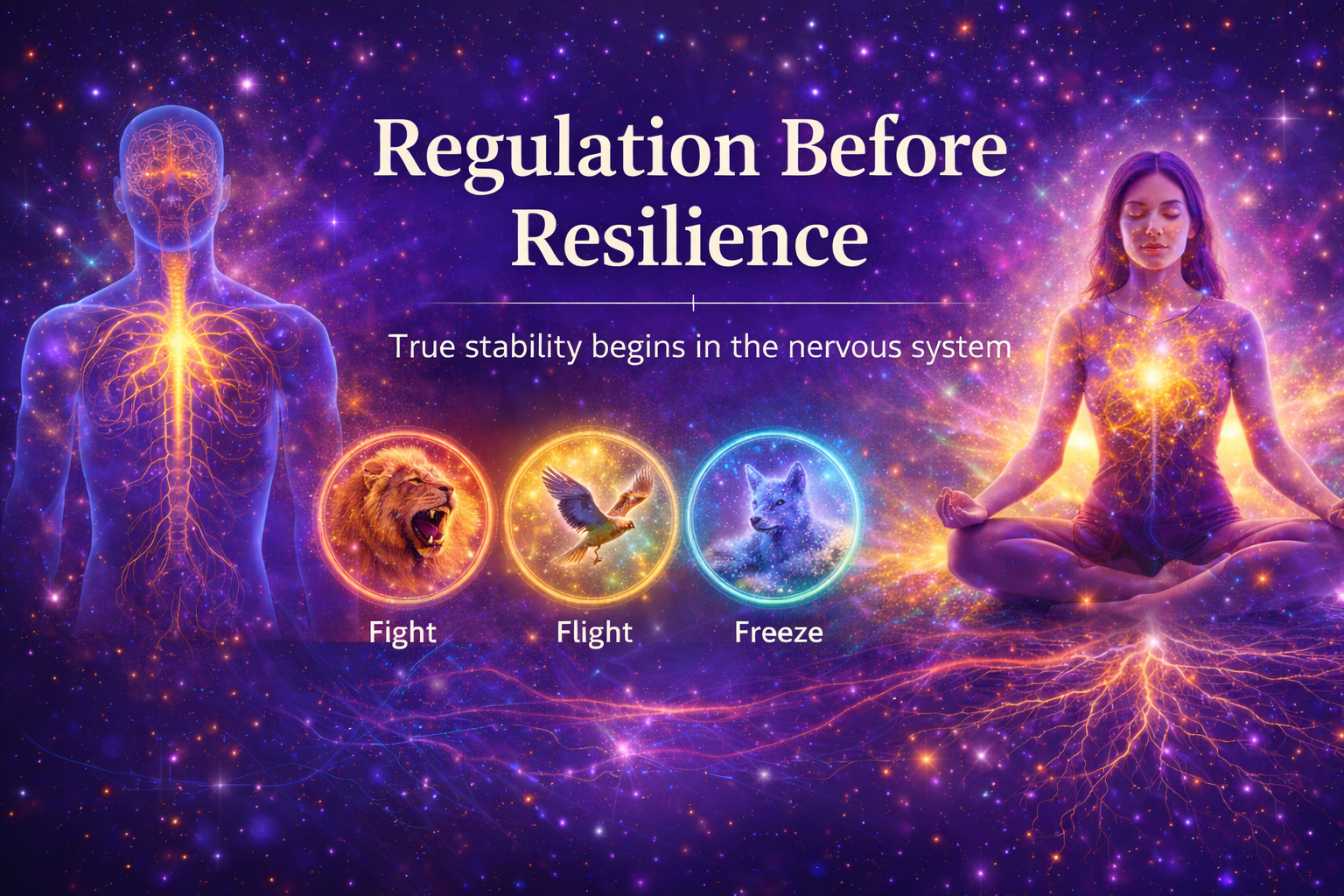
The nervous system is the body’s internal safety monitor. When it perceives threat, it shifts into survival states such as fight, flight, freeze, or fawn. These responses are not character flaws — they are protective adaptations. Understanding these patterns helps individuals recognize when they are reacting from survival rather than responding from clarity. Awareness of these states reduces shame and increases choice.
Regulation begins in the body. Breathwork, posture awareness, sensory grounding, and physical movement communicate safety to the nervous system. When the body feels safe, cognitive clarity improves naturally. Regulation is not about suppressing emotion — it is about stabilizing physiology so that emotions can move through without overwhelming the system.
Emotional stabilization skills build capacity over time. This includes learning to tolerate discomfort without escalation, recognizing early signs of activation, and intentionally slowing reactions. Stability is not the absence of stress; it is the ability to return to baseline after stress. Resilience is measured by recovery, not perfection.
Building safety from within is the foundation of sustainable growth. External circumstances cannot always be controlled, but internal regulation can be strengthened. When individuals cultivate internal safety, they develop steadiness, clearer thinking, and stronger boundaries. A regulated nervous system creates the conditions necessary for deeper psychological work and long-term transformation.